


And the factor that made it doable is similar know-how that simply bought its largest AI provider banned from the Pentagon 5 days in the past.
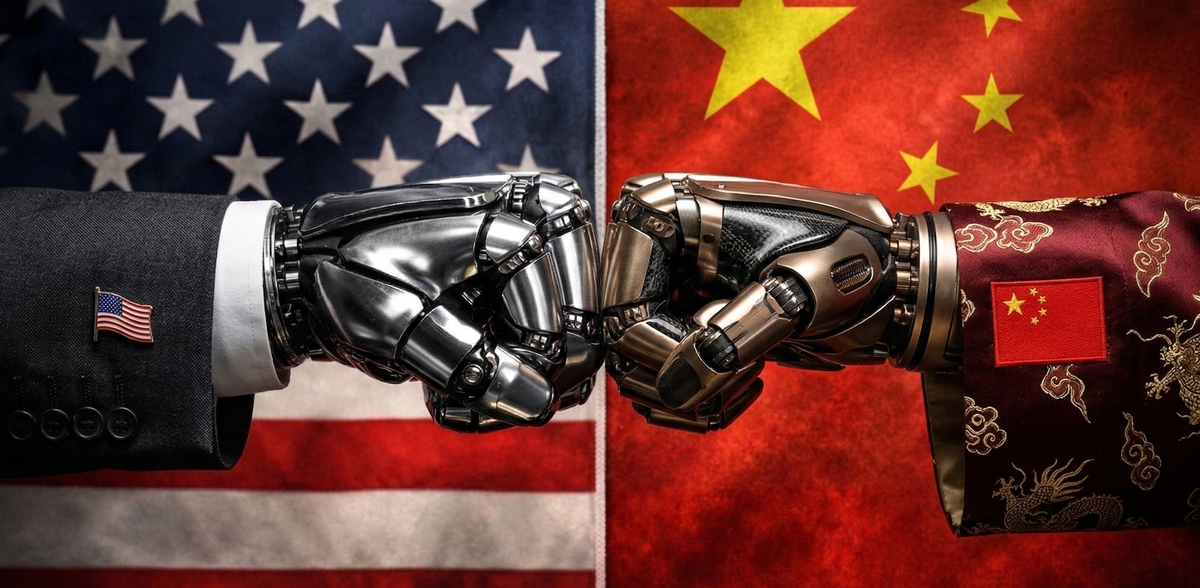
This is the AI arms race. It’s occurring proper now, in actual time, and most of the people overlaying it are nonetheless writing about it prefer it’s a future concern.
The Problem AI Actually Solved
To perceive why this issues, it’s important to perceive what drawback AI solved within the first place.Information gaps are a much bigger cause for a contemporary army to lose than their troopers not being courageous sufficient or the breakage of apparatus. Specifically, the time it takes to go from “we know where a target is” to “we hit it.” You need to confirm the intelligence. Cross-reference it towards different sources. Brief the commanders. Work via the concentrating on sequence. Consider what occurs in the event you’re incorrect. In a posh battle, that full cycle can take hours. For a high-value management goal, days.
Iran constructed its whole protection technique round that window. Hardened services. Leadership compounds that moved on irregular schedules. Nuclear websites buried deep sufficient that you just could not hit them with out understanding precisely the place to go. The assumption baked into Iranian deterrence was that any adversary would wish time, and that point purchased survival.
AI closed the window.
The methods operating beneath Operation Epic Fury have been fusing drone feeds, satellite tv for pc imagery, and telecommunications intercepts at speeds no human analytical staff might come near. And crucially, they have been doing it throughout all goal classes concurrently. Leadership concentrating on, air protection suppression, nuclear facility strikes. All without delay, reasonably than sequentially. Craig Jones, a senior lecturer at Newcastle University who research army kill chains, described what that appears like from the skin: AI methods “making recommendations for what to target” at speeds that exceed human cognitive processing, enabling “simultaneous execution at scale.”
900 strikes in twelve hours. That’s what a concentrating on system operating sooner than any human workers can maintain truly appears like in apply.
Build a customized agent totally free (no-code)
Try right here
How the US Actually Built This
Here’s one thing most individuals do not know: the US army virtually did not have any of this.
Project Maven launched in 2017 with a modest objective – use machine studying to scan drone surveillance footage and routinely flag objects of army curiosity, so analysts did not need to manually watch hours of video in search of a weapons cache or a automobile. When you possibly can course of surveillance sooner than a goal can transfer, you alter the entire logic of the battlefield. Google received the contract, then over 4,000 workers signed a petition refusing to construct it, and Google walked away. The Pentagon scrambled.
Then Palantir stepped in and by May 2024 held a $480 million Army contract for the Maven Smart System, a platform fusing satellite tv for pc imagery, geolocation knowledge, and communications intercepts right into a single battlefield interface now deployed throughout 5 combatant instructions and adopted by NATO’s Allied Command Operations.
Alongside Maven, the Pentagon constructed GenAI.mil, a platform each army and civilian DoD worker can entry. By December 2025, xAI’s Grok fashions have been being built-in into it at a classification degree that enables dealing with of delicate managed data. A poster in Pentagon hallways advised workers the brand new AI device was accessible and so they have been “highly encouraged” to make use of it.
Then got here Venezuela. Earlier in 2026, in the course of the US operation that captured Nicolás Maduro, Anthropic’s Claude, deployed via its Palantir contract, supported intelligence evaluation and concentrating on. According to the Wall Street Journal, Claude was at that second the one AI mannequin operating contained in the Pentagon’s categorised networks.
That association lasted till 5 days in the past, when the Pentagon and Anthropic publicly fell aside.
The breakdown got here right down to a selected disagreement about what the army might use AI for. Anthropic drew two strains: no absolutely autonomous weapons, and no mass home surveillance of Americans. The Pentagon needed authorization for any lawful use. Those two positions could not be reconciled. The Trump administration designated Anthropic a “supply chain risk to national security,” and ordered all authorities businesses to cease utilizing its merchandise. Within hours, OpenAI introduced a deal. xAI adopted days later. The transition is actively underway whereas strikes proceed over Tehran.
What that reshuffling tells you is that this: the US army now treats frontier AI as infrastructure. The sort the place dropping a provider creates a direct operational gap, not an inconvenience you handle subsequent quarter.
Cold Wars vs AI Arms Race
People hold reaching for the nuclear analogy once they speak about AI and geopolitics. Let’s discuss if that analogy holds true.The Cold War arms race had a bodily constraint constructed into it. Enriching uranium is difficult. Building missiles requires factories. Counting warheads is feasible as a result of they exist as bodily objects. That bodily shortage is what made arms management treaties work finally, since you might confirm. The horror of mutually assured destruction was no less than a steady horror.
AI runs on compute, knowledge, and expertise. Compute will be manufactured domestically, bought via intermediaries, or constructed round totally different chip architectures fully. Data will be stolen, synthesized, or constructed up from open-source foundations. The moat is actual and it leaks consistently.
The extra trustworthy historic parallel is Britain’s Chain Home radar community in 1940. Chain Home was genuinely decisive within the Battle of Britain. German pilots flew into airspace the place British controllers might see them coming. The Luftwaffe’s strategic plan assumed approximate informational parity. They have been incorrect, and it price them the marketing campaign. Germany had radar know-how too. What Germany did not have was the system round it: the community of stations, the protocols for relaying intercept knowledge to controllers in actual time, the doctrine for appearing on that knowledge underneath fireplace, the educated personnel who made the entire thing perform when it truly mattered.
That distinction between know-how and system is a very powerful factor to grasp about the place the US stands proper now. The benefit is the years of categorised deployment infrastructure, the operational doctrine constructed round AI-generated intelligence, the battlefield suggestions from three precise conflicts that has been feeding again into the methods themselves. That takes years to construct. It would not replicate in a single day from a procurement doc.
The query is how lengthy it stays forward.
Build a customized agent totally free (no-code)
Try right here
Where does China Stands
The PLA’s doctrinal framework calls the objective “intelligentized warfare.” The idea treats AI because the organizing precept for the complete future army, not a layer added onto present constructions. Georgetown’s Center for Security and Emerging Technology reviewed hundreds of PLA procurement requests from 2023 and 2024 and located one thing pointed: China is constructing AI decision-support methods particularly designed to compensate for perceived weaknesses in its personal officer corps. The PLA would not absolutely belief its chain of command to outthink American commanders in a fast-moving battle. So it is constructing AI to do it as a substitute.
And China has an actual card to play. DeepSeek’s emergence in early 2025 confirmed {that a} extremely succesful reasoning mannequin might be constructed with considerably much less compute than Western frontier labs require. That effectivity benefit issues in a army context as a result of edge-deployed methods, drones and autonomous autos working removed from cloud infrastructure, cannot run heavy server-side inference. PLA procurement notices referencing DeepSeek accelerated all through 2025. The mannequin runs on Huawei’s domestically produced chips, which is precisely the form of “algorithmic sovereignty” Beijing has been constructing towards for years.
The Pentagon’s personal December 2025 China report acknowledged the efficiency hole had “narrowed.”
The tougher hole to measure is operational. The PLA hasn’t fought a battle since 1979. Its AI methods have been examined in simulations and procurement benchmarks, not within the live-fire situations that US and Israeli methods have been refined via throughout three precise conflicts in 5 years. Simulation-trained AI and combat-tested AI are various things. How totally different is one thing you solely uncover when it issues.
And there are zero moral debates occurring inside Beijing about any of this. The similar Georgetown procurement overview discovered nothing resembling the Anthropic-style crimson strains round autonomous kill chains. A March 2025 paper from PLA-linked researchers described absolutely autonomous execution of fight choices in city environments, together with the choice to interact, as an easy improvement objective. Moving that quick towards autonomous deadly AI in all probability creates actual failure modes: methods that misidentify targets, escalate in methods operators cannot reverse, behave unpredictably underneath stress. But the nations that discover these limits would be the ones that deployed first.
What Rest of the World Demonstrated
Previously, Ukraine confirmed the primary technology of AI-enabled warfare in apply. AI-assisted drone concentrating on went from roughly 30-50% accuracy to round 80%. Both sides developed digital warfare countermeasures and each side tailored round them. Ukrainian volunteer builders have been delivery AI concentrating on modules for $25 a drone. The complete battle turned a dwell machine-learning competitors the place the coaching knowledge was actual battlefield efficiency.
If Ukraine stunned you, Gaza went additional nonetheless. Israel deployed a concentrating on stack with no actual precedent in open warfare. The Gospel generated constructing goal lists. Lavender recognized particular person Hamas members from commanders right down to foot troopers. “Where’s Daddy” tracked targets’ telephones to their properties. The IDF maintained that human validation occurred on the remaining step, however the tempo of operations had compressed that window to seconds.
Iran, this week, is the inverse demonstration. Shahed drones in giant numbers. Ballistic missiles aimed toward mounted, identified targets. The strikes have triggered actual injury: six American troopers killed, airports hit throughout the Gulf, Amazon’s knowledge facilities offline. But the UAE Ministry of Defense reported intercepting 165 ballistic missiles, two cruise missiles, and 541 Iranian drones for the reason that counterstrikes started. Most of them by no means arrived.
When one facet has AI-enabled precision and the opposite is launching at quantity with out it, that intercept ratio is what the divergence truly appears like in apply.
So Is AI Actually a Competitive Edge?
Yes. Definitively, in 2026. The proof is operating proper now over Iranian airspace, and it has been accumulating since 2020.
What it’s, particularly, is a big multiplier on present army functionality. It makes succesful militaries sooner, extra exact, and in a position to maintain operational tempo that human workers alone might by no means match. It would not remodel an underfunded army with unhealthy doctrine right into a formidable one.
And the benefit sits on a narrower basis than it appears. A small variety of American firms management the frontier fashions. Those firms have their very own views on what their know-how ought to do, and people views at the moment are demonstrably negotiable underneath political stress, in ways in which create actual instability on the worst doable moments. The operational knowledge that makes battlefield AI good accumulates solely via precise conflicts. The expertise pipeline for constructing frontier fashions would not respect borders.
The arms race parallel is actual. The Manhattan Project was categorised for 3 years earlier than it modified all the things. This race is enjoying out in company press releases, Pentagon procurement notices, and X posts from AI firm CEOs, with lively strikes within the background and an ongoing negotiation about what the fashions are even allowed to do.
The window by which the US holds a commanding lead in army AI is open. It is just not everlasting.
Build a customized agent totally free (no-code)
Try right here
Sources: Al Jazeera, CNBC, Washington Post dwell battle protection (March 2026); Interesting Engineering, “Iran war exposes the expanding role of AI in military strike planning”; MIT Technology Review, “OpenAI’s compromise with the Pentagon is what Anthropic feared”; Foreign Affairs, “China’s AI Arsenal” (March 2026); CSET, “China’s Military AI Wish List” (February 2026); DefenseScoop, GenAI.mil and Pentagon AI protection; Breaking Defense, “NATO picks Palantir’s Maven AI” (April 2025); U.S. Army War College, “AI’s Growing Role in Modern Warfare” (August 2025); CSIS, “Technological Evolution on the Battlefield” (October 2025); UK House of Commons Library, “US-Israel strikes on Iran: February/March 2026.”
